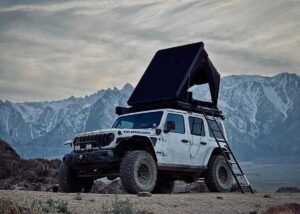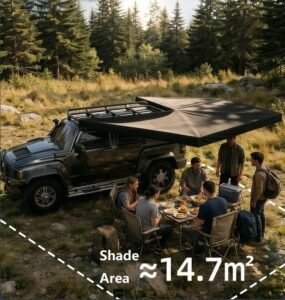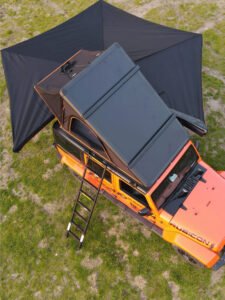
Yes — a properly installed rooftop tent can be safe for everyday driving, provided that the vehicle, roof rack system, mounting hardware, and rooftop tent are correctly matched.
However, safety is not simply a question of whether a car is an SUV, pickup truck, or passenger vehicle. The most important factors are the vehicle’s dynamic roof load rating, roof rack capacity, rooftop tent weight, mounting system, weight distribution, and overall vehicle handling.
One of the most common misunderstandings about rooftop tents is confusing dynamic load capacity with static load capacity.
When your vehicle is moving, the roof and rack system experience braking forces, acceleration, cornering, bumps, vibration and aerodynamic loads. When the vehicle is parked, the load situation is very different.
For example, Thule specifically distinguishes between dynamic weight capacity while driving and static weight capacity when parked, noting that the static capacity can be substantially higher.
So, the better question isn’t simply:
“Is a rooftop tent safe?”
The better question is:
“Is this particular rooftop tent safely matched to my vehicle and roof rack system?”
Let’s look at the key factors.
1. Can You Drive Every Day With a Rooftop Tent?
In many cases, yes.
A rooftop tent is designed to remain mounted on the vehicle while you travel between camping destinations. This is one of the main advantages of rooftop camping compared with traditional ground tents.
However, installing a rooftop tent changes the vehicle’s characteristics.
Adding weight to the roof:
- increases the vehicle’s center of gravity
- adds aerodynamic drag
- can increase wind noise
- may affect fuel consumption
- can slightly change cornering and braking behavior
- adds additional load to the roof rack and mounting points
Vehicle manufacturers also warn that roof-mounted loads can change handling characteristics. For example, Kia’s owner guidance states that roof loads raise the center of gravity and advises drivers to avoid sudden maneuvers, sharp turns and excessive speed when carrying roof-mounted loads.
Therefore, a safe rooftop tent setup should not be treated exactly like an unloaded vehicle.
For everyday driving, smooth acceleration, controlled braking and careful cornering are good practices.
2. The Most Important Number: Dynamic Roof Load Capacity
If you are considering a rooftop tent, one of the first specifications you should check is your vehicle’s dynamic roof load capacity.
What is dynamic roof load?
Dynamic roof load is the maximum weight that the vehicle’s roof system is designed to carry while the vehicle is moving.
This is different from the static load capacity when the vehicle is parked.
Your driving load normally includes:
Rooftop tent + roof racks + mounting hardware + other roof-mounted equipment
For example:
| Component | Example Weight |
|---|---|
| Rooftop tent | 55 kg |
| Roof rack/crossbars | 8 kg |
| Mounting hardware | 2 kg |
| Total dynamic roof load | 65 kg |
If your vehicle’s dynamic roof-load limit is 75 kg, this example leaves only 10 kg of capacity.
That means you cannot simply look at the tent’s weight and assume the setup is safe.
Thule similarly advises that the combined weight of the rooftop tent and rack system must remain within the applicable dynamic load limits.
A simple formula
Total driving roof load = Tent weight + Roof rack weight + Mounting hardware + Other roof-mounted accessories
The result should be within the lowest applicable dynamic load rating.
3. Dynamic Load vs. Static Load: What’s the Difference?
This is probably the most important concept for anyone new to rooftop tents.
Dynamic Load
Dynamic load applies when the vehicle is moving.
The roof system has to deal with:
- braking
- acceleration
- cornering
- road bumps
- vibration
- wind forces
- uneven road surfaces
Therefore, the permitted dynamic load is usually much lower.
Static Load
Static load applies when the vehicle is parked.
This includes:
- the rooftop tent
- the occupants
- bedding
- camping equipment inside the tent
Because the vehicle is stationary, the loading conditions are different.
Thule explains that static load capacity can exceed dynamic capacity, and gives a guideline of approximately 3× the dynamic capacity for some of its roof-rack systems. However, this should not be interpreted as a universal rule for every vehicle or rack. You must follow the specifications from your vehicle, roof-rack and rooftop-tent manufacturers.
Why can two people sleep in a tent when the roof has a much lower driving rating?
This is a common question.
Imagine a rooftop tent weighs 60 kg and two occupants weigh another 150 kg.
That does not automatically mean your vehicle needs a 210 kg dynamic roof rating.
The 210 kg figure is relevant to the parked/static condition, not necessarily the driving condition.
Once the vehicle is parked, the tent’s structure, roof-rack system, mounting points and—depending on the design—the ladder distribute the load differently.
Never use the static capacity to justify exceeding the dynamic capacity while driving.
The dynamic rating is the critical number when the vehicle is moving.
4. Is a Heavy Rooftop Tent Less Safe?
Not necessarily — but weight matters.
A heavier rooftop tent consumes more of your vehicle’s available dynamic roof-load capacity.
For example:
Setup A
- Tent: 45 kg
- Rack: 8 kg
- Hardware: 2 kg
- Total: 55 kg
Setup B
- Tent: 75 kg
- Rack: 10 kg
- Hardware: 2 kg
- Total: 87 kg
If the vehicle’s dynamic roof-load limit is 75 kg, Setup A may have more room to work with, while Setup B would exceed the limit.
This is why lightweight rooftop tent design can be particularly valuable for customers who use their vehicles every day.
A lighter tent can potentially provide:
- greater compatibility with more vehicles
- more available roof-load capacity
- less impact on vehicle handling
- easier installation
- potentially better fuel efficiency
- easier removal and storage
For manufacturers and buyers, the goal should not simply be to make a rooftop tent as large as possible.
The better goal is:
Maximum camping functionality with a reasonable overall weight.
5. Does a Rooftop Tent Affect Everyday Driving?
Yes.
Even if the setup is within the manufacturer’s weight limits, a rooftop tent changes the vehicle’s aerodynamic profile and center of gravity.
You may notice:
Increased wind resistance
A rooftop tent creates additional frontal area and aerodynamic drag.
This can increase wind noise and potentially affect fuel consumption.
Higher center of gravity
Additional weight on the roof moves some mass higher on the vehicle.
This can slightly influence cornering behavior.
Crosswind sensitivity
A large rooftop tent presents additional surface area to crosswinds, especially on highways, bridges and exposed roads.
Different braking and acceleration characteristics
Additional mass means the vehicle may not feel exactly the same as it does without the tent.
This doesn’t mean a rooftop tent is inherently unsafe.
It means drivers should understand that the vehicle has changed.
6. Your Roof Rack Is Just as Important as the Rooftop Tent
A high-quality rooftop tent cannot compensate for an unsuitable roof rack.
The roof rack is the connection between the tent and the vehicle.
Thule describes the roof rack as the foundation of the rooftop tent system because it transfers the load to the vehicle’s structural mounting points.
Before installation, check:
① Rack weight capacity
The rack must be rated for the rooftop tent application.
② Vehicle compatibility
The rack must be designed for your specific vehicle and roof type.
③ Crossbar spacing
The rooftop tent manufacturer may specify a minimum or maximum distance between crossbars.
④ Mounting points
The mounting system should distribute the load appropriately rather than concentrating excessive force in one area.
⑤ Roof type
Different vehicles may have:
- raised roof rails
- flush rails
- fixed mounting points
- bare roofs
- panoramic glass roofs
These configurations are not interchangeable.
For example, Thule specifically recommends checking compatibility for vehicles with glass or panoramic roofs before installing a rooftop tent.
7. Can a Rooftop Tent Damage the Car Roof?
It can if the system is incorrectly selected or installed.
Potential problems include:
- overloaded roof rails
- unsuitable roof racks
- incorrect crossbar spacing
- loose mounting hardware
- excessive point loading
- incompatible roof structures
- exceeding the vehicle’s specified roof load
This is why the statement “the tent fits my car” is not enough.
A proper compatibility check should consider:
Vehicle + Roof + Roof Rack + Mounting System + Rooftop Tent
All five components need to work together.
8. How Should You Drive With a Rooftop Tent?
There is no single universal speed limit that applies to every rooftop tent.
Your vehicle manufacturer’s instructions, rooftop tent manufacturer’s instructions, roof-rack specifications and local traffic laws should take priority.
However, some general driving habits can improve safety.
Avoid aggressive cornering
A higher center of gravity means sudden high-speed cornering is less desirable.
Brake progressively
Avoid unnecessary hard braking whenever possible.
Be careful in strong crosswinds
Pay particular attention when driving across bridges, open highways or exposed mountain roads.
Slow down on rough roads
Road impacts can create forces beyond the simple static weight of the tent.
Check the mounting system regularly
Long-distance driving, vibration and off-road use can loosen hardware over time.
Keep the tent fully closed before driving
The tent should be completely folded, latched and secured according to the manufacturer’s instructions.
9. What About Highway Driving?
This is one of the most common questions from rooftop tent owners.
A properly installed rooftop tent can be used for highway travel, but highway driving deserves additional attention.
At higher speeds, aerodynamic forces become increasingly important.
You should make sure:
- the tent is completely closed
- all latches are secured
- mounting hardware is properly tightened
- the roof rack is correctly installed
- the total dynamic load is within limits
- there are no loose accessories
- the vehicle feels stable under normal driving conditions
Don’t assume that because a rooftop tent survived one highway trip, the installation is automatically safe forever.
Regular inspection is especially important for customers who drive long distances or frequently travel on rough roads.
10. What Is the Safest Type of Rooftop Tent for Everyday Driving?
There isn’t one universal “safest” rooftop tent.
The better choice depends on the vehicle and the intended use.
Hard Shell Rooftop Tents
Hard shell tents are popular for everyday driving because they can provide a relatively streamlined closed profile.
Potential advantages include:
- fast setup
- compact closed form
- good weather protection
- aerodynamic design possibilities
- convenient daily use
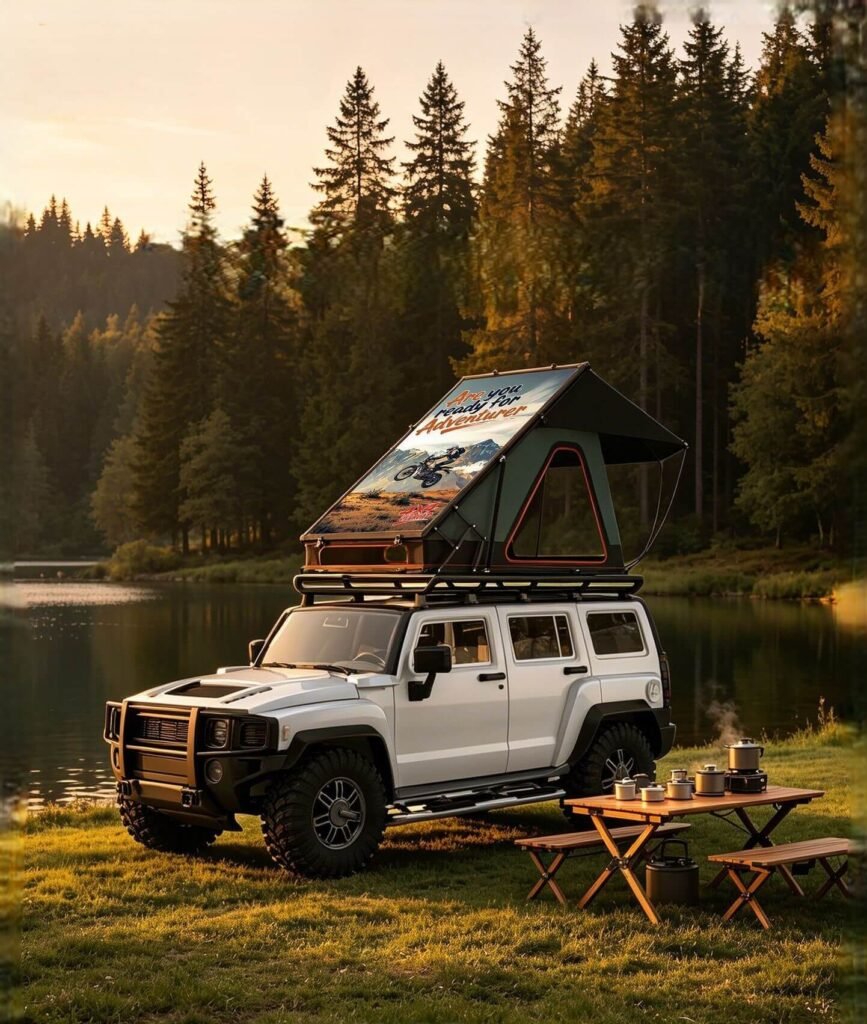
For customers who frequently drive their vehicle during the week and camp on weekends, a lightweight hard-shell design can be particularly attractive.
Soft Shell Rooftop Tents
Soft shell rooftop tents can offer:
- larger sleeping areas
- flexible layouts
- potentially lower purchase costs
- a wide range of configurations
However, their folded dimensions and weight should still be evaluated carefully for everyday driving.

Ultimately, the safest rooftop tent is one that is correctly matched to the vehicle and roof-rack system, rather than simply choosing between hard shell and soft shell.
11. 7 Safety Checks Before Installing a Rooftop Tent
Before installing any rooftop tent, we recommend checking these seven items.
Rooftop Tent Safety Checklist
1. Check your vehicle’s dynamic roof load
Find the specification in your vehicle owner’s manual or confirm it with the manufacturer.
2. Check the roof-rack rating
Make sure the rack is approved for the intended rooftop tent application.
3. Calculate the complete driving load
Don’t look only at the tent weight.
4. Check the mounting system
Make sure the tent is correctly attached to the crossbars or platform.
5. Check crossbar spacing
Follow the rooftop tent manufacturer’s requirements.
6. Inspect the roof type
Pay particular attention to panoramic glass roofs, unsupported rails and other special configurations.
7. Recheck everything after installation
Inspect the mounting hardware before your first trip and periodically afterward.
12. A Simple Rooftop Tent Safety Calculation
Here’s a practical example.
Suppose you have:
Vehicle dynamic roof-load limit: 75 kg
Rooftop tent: 58 kg
Roof rack: 7 kg
Mounting hardware: 2 kg
Then:
58 + 7 + 2 = 67 kg
That gives you:
75 − 67 = 8 kg remaining capacity
If you then add another 10 kg of roof-mounted equipment, the total becomes:
77 kg
That would exceed the 75 kg dynamic limit.
This simple calculation illustrates why every component matters.
Don’t forget accessories such as:
- awnings
- solar panels
- recovery boards
- roof boxes
- additional brackets
- other roof-mounted equipment
when calculating the total driving load.
13. Does a Rooftop Tent Make Your Car Less Fuel Efficient?
It can.
Any additional roof-mounted equipment can increase aerodynamic drag.
The actual effect depends on:
- vehicle type
- vehicle speed
- tent size
- tent shape
- roof height
- wind conditions
- driving conditions
A streamlined hard-shell rooftop tent may have a different aerodynamic effect from a large soft-shell configuration.
Therefore, if the vehicle is used as a daily driver, aerodynamic design should be considered alongside weight.
This is one reason why modern rooftop tent development increasingly focuses on the combination of:
Low Weight + Low Profile + Aerodynamic Shape + Structural Strength
rather than focusing on sleeping capacity alone.
14. What Should Buyers Look for in a Safe Rooftop Tent?
If you’re comparing different rooftop tents, don’t focus only on price.
Look at the complete system.
Important specifications include:
| Specification | Why It Matters |
|---|---|
| Tent weight | Affects dynamic roof load |
| Closed height | Influences aerodynamics and wind resistance |
| Base construction | Affects structural performance |
| Mounting system | Determines vehicle/rack compatibility |
| Roof rack requirements | Ensures correct installation |
| Static load capacity | Important when the tent is occupied |
| Dynamic load requirements | Critical while driving |
| Fabric/weather resistance | Important for camping conditions |
| Hardware quality | Important for long-term durability |
| Ladder capacity | Important for entry and use |
| Warranty | Provides additional buyer confidence |
A professional rooftop tent supplier should be able to provide clear technical specifications rather than simply saying:
“This tent fits most SUVs.”
15. FAQ: Rooftop Tent Safety
Are rooftop tents safe while driving?
Yes, when the rooftop tent, roof rack and vehicle are properly matched and installed according to manufacturer requirements.
The most important factor while driving is staying within the vehicle and rack system’s dynamic load limits.
Can you leave a rooftop tent on your car all the time?
In many cases, yes. Rooftop tents are designed to remain mounted during travel.
However, if the vehicle is used every day, owners should consider the additional weight, aerodynamic drag, fuel consumption and changes in vehicle handling.
Can a rooftop tent fall off while driving?
A correctly installed rooftop tent should remain securely attached.
The risk increases if the wrong roof rack is used, mounting hardware is incorrectly installed, fasteners become loose, or the vehicle/rack/tent combination exceeds its specified limits.
Regular inspection is therefore important.
How much weight can a car roof hold with a rooftop tent?
There is no universal number.
You need to check the vehicle’s dynamic roof-load rating and the roof rack’s rating.
The applicable limit is determined by the specific vehicle and rack system. Always follow the lowest applicable rating.
Can two people sleep safely in a rooftop tent?
Yes, provided that the rooftop tent’s static load capacity is sufficient for the tent, occupants and applicable equipment, and the vehicle and rack system are approved for the installation.
Remember that static and dynamic load limits are different.
Can I drive with people inside a rooftop tent?
No.
A rooftop tent is designed to be occupied when the vehicle is parked. Occupants should leave the tent before the vehicle moves.
Vehicle manufacturers explicitly warn against moving a vehicle with occupants inside a rooftop tent.
Are rooftop tents safe on SUVs?
Many SUVs can accommodate rooftop tents, but being an SUV does not automatically mean the vehicle is suitable.
You still need to check:
- dynamic roof load
- roof structure
- roof rack compatibility
- tent weight
- mounting requirements
Are rooftop tents safe on pickup trucks?
Many pickup trucks are suitable for rooftop tents, but the mounting location matters.
Depending on the vehicle, the tent may be mounted on the cab roof, a bed rack or another load-rated structure.
The relevant manufacturer specifications should always be checked.
Are rooftop tents safe on small cars?
Some smaller cars can support lightweight rooftop tents, but compatibility must be checked carefully.
For a small vehicle, tent weight and roof-rack capacity become particularly important.
A lightweight rooftop tent may provide more practical flexibility than a heavy model.
Do rooftop tents affect vehicle handling?
Yes.
The additional weight and higher center of gravity can affect handling, while the tent can also increase aerodynamic drag and crosswind sensitivity.
Drivers should adapt their driving style accordingly.
Final Thoughts: Are Rooftop Tents Safe for Everyday Driving?
Yes — rooftop tents can be safe for everyday driving when the complete system is properly engineered, correctly installed and used within its specified limits.
The key is not simply the rooftop tent itself.
Think of rooftop tent safety as a complete system:
Vehicle → Roof → Roof Rack → Mounting Hardware → Rooftop Tent
If these components are correctly matched, a rooftop tent can be a practical solution for people who use the same vehicle for both daily commuting and weekend camping.
For everyday use, we recommend paying particular attention to four things:
1. Keep the driving weight within the dynamic roof-load limit.
2. Use a roof-rack system designed and rated for the application.
3. Choose a rooftop tent with an appropriate weight and aerodynamic profile.
4. Inspect the mounting system regularly.
Ultimately, good rooftop tent design is not about making the strongest or largest tent possible. It is about achieving the right balance between structural strength, weight, durability, vehicle compatibility and everyday usability.

Need a Rooftop Tent for Your Market?
For outdoor brands, distributors and retailers, choosing the right rooftop tent is not only about sleeping capacity.
A commercially successful model should also consider:
- vehicle compatibility
- overall tent weight
- dynamic and static load requirements
- aerodynamic design
- mounting system
- weather resistance
- durability
- OEM customization
- packaging and shipping efficiency
If you are looking for lightweight rooftop tents, hard-shell rooftop tents or OEM/ODM rooftop tent solutions, working directly with Linghao Ourdoor can help you develop a product better suited to your target market.