
If you enjoy overlanding, road trips, or frequent outdoor adventures, you may wonder whether a hard shell rooftop tent can withstand long-term outdoor use.
The good news is that hard shell rooftop tents are designed for outdoor conditions, and many owners leave them mounted on their vehicles between camping trips. However, continuous exposure to sunlight, rain, humidity, dust, and temperature changes can gradually affect their performance and lifespan.
So, are hard shell rooftop tents suitable for long-term outdoor use? Let’s look at the key factors.
1. Can You Leave a Hard Shell Rooftop Tent Outdoors All Year?
Yes, many hard shell rooftop tents can remain mounted on a vehicle throughout the year, provided they are properly designed, installed, and maintained.
Their rigid outer shells help protect the folded tent fabric, mattress, and internal components when the tent is closed.
However, long-term outdoor exposure can still cause problems:
- UV exposure: Prolonged sunlight can fade the shell and gradually weaken exposed fabrics and seals.
- Rain and humidity: Moisture trapped inside can lead to mold, mildew, and unpleasant odors.
- Temperature changes: Repeated heating and cooling can affect seals, adhesives, and certain plastic components.
- Dust and salt: Dust, sand, and coastal salt can accelerate wear on hinges, zippers, and mounting hardware.
If you leave your tent mounted outdoors, consider using a suitable protective cover when appropriate and inspecting it regularly.
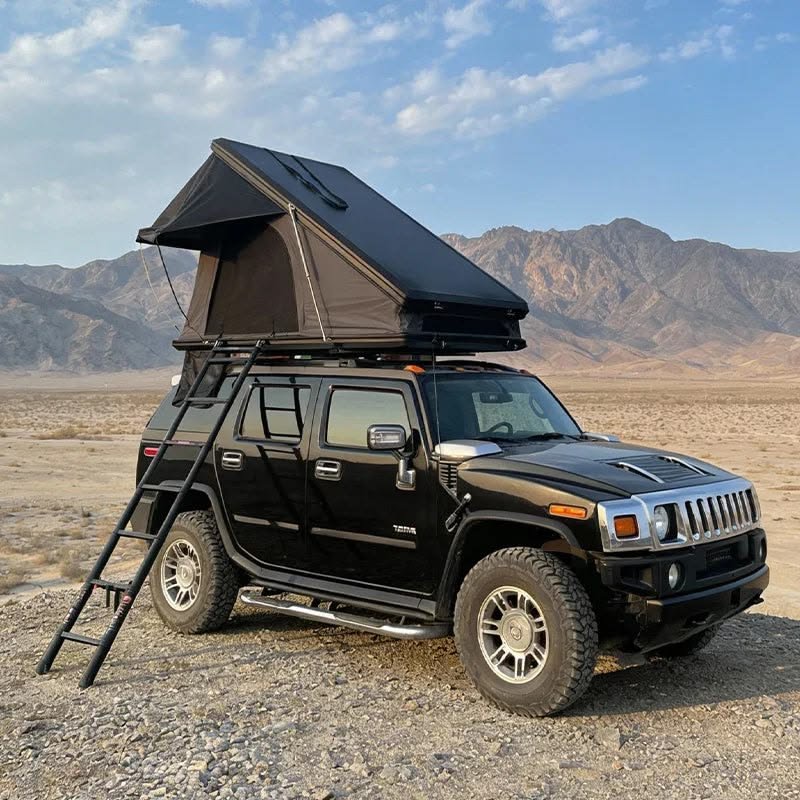
2. What Makes a Hard Shell Rooftop Tent Durable?
Not all hard shell rooftop tents are built to the same standard. If you plan to use one frequently or leave it outdoors for extended periods, pay attention to these five features.
1. Strong Shell Materials
Common materials include ABS plastic, fiberglass, and aluminum.
Each has different advantages in terms of weight, impact resistance, corrosion resistance, and maintenance. Choose a shell material that matches your expected usage and local climate.
2. UV-Resistant Fabric
The tent fabric is continuously exposed to sunlight during camping. Look for UV-resistant materials with durable waterproof coatings and quality stitching.
3. Reliable Sealing and Waterproofing
Check the shell seals, fabric seams, zippers, and drainage design. Good construction helps reduce water intrusion during rain and humid conditions.
4. Durable Hinges and Gas Struts
These components are essential for opening and closing a hardshell rooftop tent. High-quality hardware and corrosion-resistant finishes can improve long-term reliability.
5. Strong Mounting Hardware
Mounting brackets and bolts must withstand road vibration and outdoor exposure. Always use compatible mounting hardware and inspect fasteners regularly.
3. How to Extend the Lifespan of a Hard Shell Rooftop Tent
Proper maintenance can make a significant difference in long-term durability.
Here are five practical maintenance tips:
- Clean regularly: Remove dust, mud, and salt deposits using suitable cleaning products and a soft cloth.
- Keep it dry: Open the tent and allow the fabric and mattress to dry completely before extended storage.
- Inspect hardware: Check mounting bolts, hinges, latches, and gas struts for wear or damage.
- Protect against UV exposure: Park in shaded areas when possible or use a suitable protective cover.
- Maintain waterproofing: Inspect fabric coatings and seams periodically and reapply suitable treatments when necessary.
One important rule: Never leave a wet rooftop tent closed for extended periods. We recommend opening a damp tent within one or two days to prevent moisture damage. Maintenance intervals vary by material and manufacturer.
4. How Long Does a Hard Shell Rooftop Tent Last?
There is no fixed lifespan for every hard shell rooftop tent.
With quality materials and proper maintenance, a well-made model can provide many years of use. However, actual durability depends on:
- Shell and fabric quality.
- Frequency of use.
- Exposure to sunlight and harsh weather.
- Maintenance and storage conditions.
- Quality of hinges, seals, and mounting components.
For buyers comparing different models, don’t focus only on the initial purchase price. Consider replacement parts, warranty coverage, material quality, and long-term maintenance costs.
5. Is a Hard Shell Rooftop Tent Better for Long-Term Outdoor Use?
For many frequent campers and overlanding enthusiasts, a hard shell roof top tent is a practical choice.
Compared with traditional soft shell designs, its rigid outer shell offers better protection for the folded tent when traveling or storing it on the vehicle.
It is particularly suitable for:
- Frequent road trips and overlanding.
- Campers who prefer quick setup and packing.
- Vehicle owners who keep their camping equipment mounted.
- Outdoor users looking for a durable, compact shelter.
However, a hard shell rooftop tent is not maintenance-free or intended to serve as a permanent outdoor dwelling. Regular inspection, ventilation, and protection from prolonged weather exposure are still important.

Frequently Asked Questions
Can I leave my hard shell rooftop tent on my car all year?
Yes, many hard shell rooftop tents can remain mounted throughout the year. However, prolonged UV exposure, moisture, and road vibration can cause wear. Regular inspections and appropriate protection are recommended.
How long does a hard shell rooftop tent last?
Its lifespan depends on construction quality, materials, usage, and maintenance. A quality model can last for many years, but there is no guaranteed lifespan that applies to every product.
Are hard shell rooftop tents waterproof?
Many models use weather-resistant shells, waterproof fabrics, and sealed construction. However, no tent should be assumed completely waterproof under every condition. Check the manufacturer’s waterproof specifications and inspect seals and seams regularly.
Do hard shell rooftop tents fade in the sun?
Yes. Prolonged UV exposure can cause fading and material degradation. UV-resistant coatings and protective covers can help reduce the effects of sunlight.
Can a hard shell rooftop tent withstand heavy rain and strong winds?
Performance depends on the shell structure, fabric, mounting system, and tested weather limits. Always follow the manufacturer’s wind and rain guidance, and avoid using the tent in conditions beyond its rated limits.
Is a hard shell rooftop tent worth the investment?
For frequent campers, overlanders, and outdoor enthusiasts, it can be a worthwhile investment because of its convenient setup, rigid protective shell, and practical storage design. Product quality, spare parts availability, and warranty support should also be considered.
Looking for a Durable Hard Shell Rooftop Tent Supplier?
At LINGHAO, we support outdoor brands, wholesalers, and distributors looking for reliable rooftop camping products.
Whether you are developing a new rooftop tent range or sourcing products for your existing brand, we can discuss shell materials, fabric options, product specifications, OEM/private-label customization, and bulk orders.
Contact LINGHAO to discuss your rooftop tent sourcing requirements.


