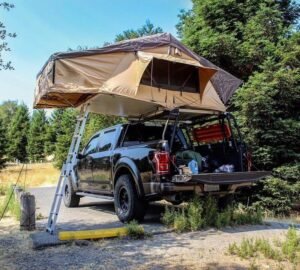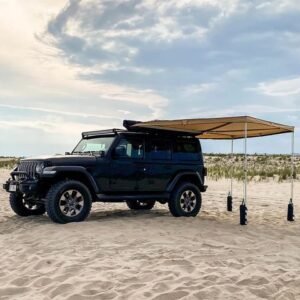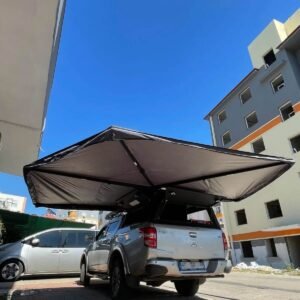
A 270 degree awning is a vehicle-mounted shelter that extends around one side and the rear of an SUV, pickup truck, or 4WD vehicle. It creates a large shaded area for outdoor cooking, relaxing, and storing camping gear.
Unlike a standard side awning, a 270 degree car awning wraps around the vehicle in a fan-shaped design, providing more coverage without requiring a separate ground tent.
In this guide, we’ll explain how a 270 awning works, its main benefits, and what to consider when choosing one.
1. How Does a 270 Degree Awning Work?
A 270-degree vehicle awning is typically mounted to a roof rack, load bars, or a compatible vehicle-mounted system. When opened, its hinged arms extend the fabric canopy along the side and around the rear of the vehicle.
The main components usually include:
- Awning fabric: Provides shade and, depending on the material and specifications, protection from rain and UV exposure.
- Frame and swing arms: Support the canopy and help it unfold around the vehicle.
- Mounting brackets: Connect the awning to a compatible roof rack or mounting system.
- Support legs and guy ropes: Provide additional stability when required.
Some models are freestanding in suitable weather conditions, while others require support poles. Always follow the manufacturer’s setup and anchoring instructions.
2. What Are the Benefits of a 270 Degree Car Awning?
More Shade Around Your Vehicle
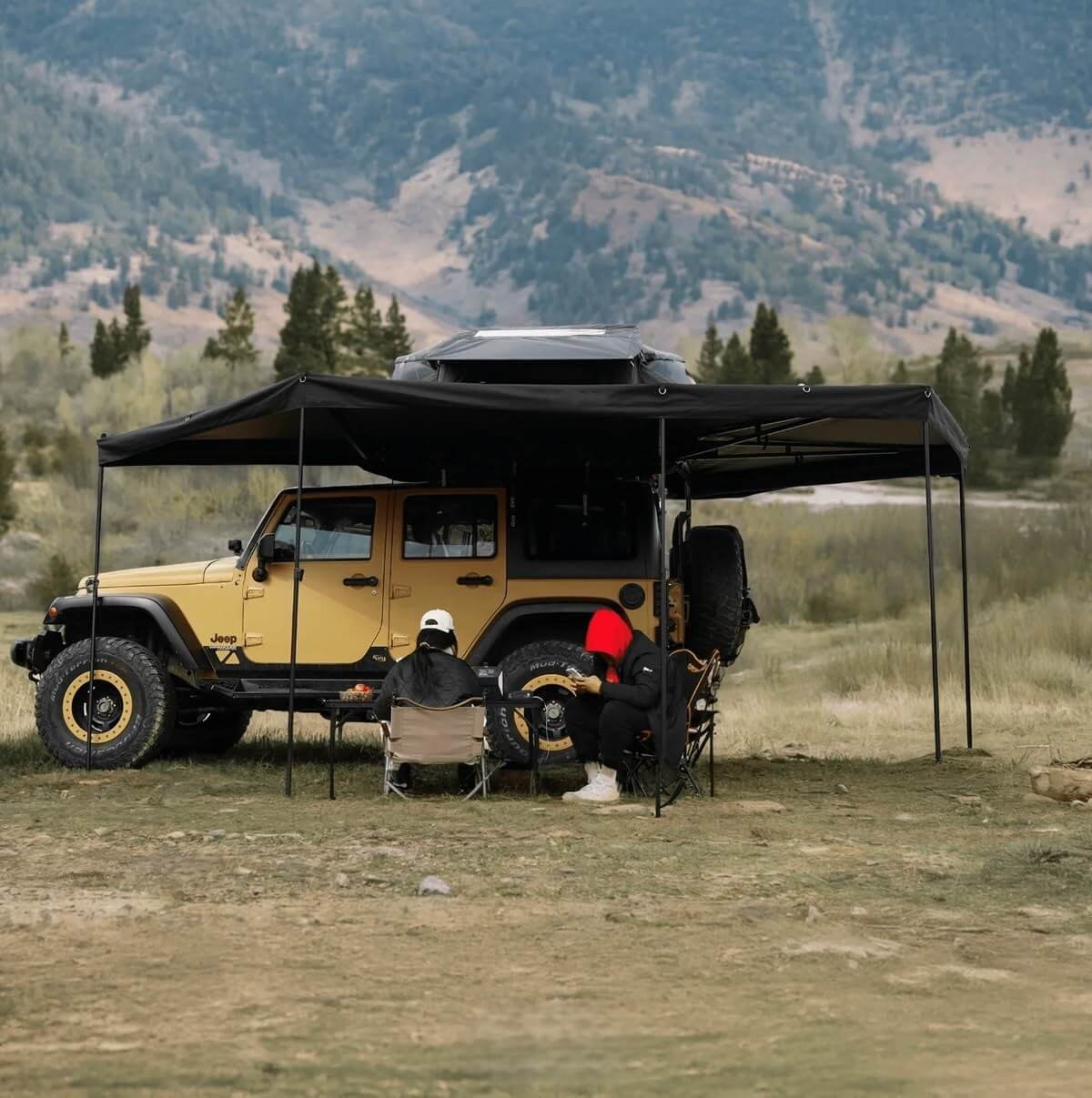
The wraparound design covers both the side and rear, creating a convenient outdoor living area. It’s particularly useful for tailgate kitchens, camping tables, and family gatherings.
Convenient Setup
Many modern 270-degree awnings feature hinged arms that unfold from a compact storage case. Some models can be deployed by one person, although setup time varies by design.
Flexible Camping Space
A 270 awning can be used for cooking, relaxing, and organizing equipment. Some models also support optional side walls or enclosure kits for added privacy and weather protection.
3. How Much Coverage Does a 270 Degree Awning Provide?
Coverage depends on the awning’s dimensions, arm length, and overall design.
For example, published specifications from Alu-Cab list its 2.6 m 270° Shadow Awning with a shade area of approximately 10 m² (108 sq. ft.) and a weight of approximately 24 kg (53 lb), excluding mounting hardware.
This is one model-specific example, not a standard for every 270-degree awning. Larger and smaller designs are available, so compare the actual coverage area and total installed weight before purchasing.
4. Is a 270 Degree Awning Right for You?
A 270-degree awning may be a good choice if you:
- Frequently go on road trips or overlanding adventures.
- Need shade along both the side and rear of your vehicle.
- Use your tailgate as an outdoor kitchen or equipment station.
- Want a larger sheltered area without setting up a separate canopy.
However, a larger awning can add considerable weight to your vehicle. Check roof rack capacity, mounting compatibility, packed dimensions, and clearance around doors and rooftop tents.
Wind also requires attention. The large canopy can catch strong gusts, so use support legs and ground anchors as directed, and retract the awning when conditions exceed its specified limits.
Frequently Asked Questions
What is the difference between a 180 and 270 degree awning?
A 180-degree awning generally extends along one side of the vehicle, while a 270-degree awning wraps around one side and the rear. The 270-degree design usually offers more wraparound coverage, particularly around the tailgate.
Are 270 degree awnings waterproof?
Some models use waterproof fabrics, but performance varies. Check the manufacturer’s hydrostatic-head rating, seam construction, and rain-use instructions. Proper setup is also important to prevent water pooling.
Can one person set up a 270 degree awning?
Yes, some models are designed for one-person operation. However, setup time depends on the frame design, awning size, and whether additional poles or anchoring are required.
Can a 270 degree awning be installed with a rooftop tent?
Yes, many vehicle setups accommodate both. You must confirm mounting compatibility, roof load limits, bracket positioning, and clearance for opening the tent and deploying the awning.
What should I look for when buying a 270 degree awning?
Compare coverage area, packed size, total weight, fabric quality, UV protection, frame construction, mounting compatibility, wind guidance, and available accessories. For outdoor brands and distributors, MOQ, OEM customization, packaging, and quality control are also important.
Looking for a 270 Degree Awning Supplier?
At LINGHAO Outdoor, we support outdoor product sourcing for brands and distributors developing their camping and overlanding ranges.
Contact us to discuss 270-degree vehicle awnings, product specifications, OEM/private-label options, and bulk purchasing requirements.