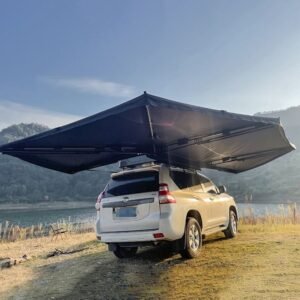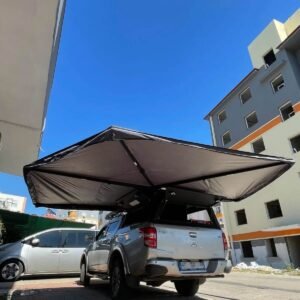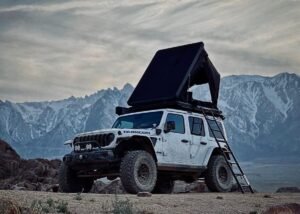
When choosing a car awning for camping or overlanding, one of the biggest decisions is whether to choose a freestanding awning or a pole-supported awning.
Both designs provide shade and outdoor shelter, but they differ in setup, stability, weight, and cost. Understanding these differences will help you choose the right vehicle awning for your needs.
1. What Is the Difference Between Freestanding and Pole-Supported Awnings?
A freestanding car awning uses a reinforced frame and hinged arms to support the canopy without deploying ground poles during initial setup. It is designed for quick deployment, making it convenient for solo campers and frequent stops.
A pole-supported car awning uses adjustable poles to support the canopy. The poles are positioned and secured during setup, usually with stakes and guy ropes where appropriate.
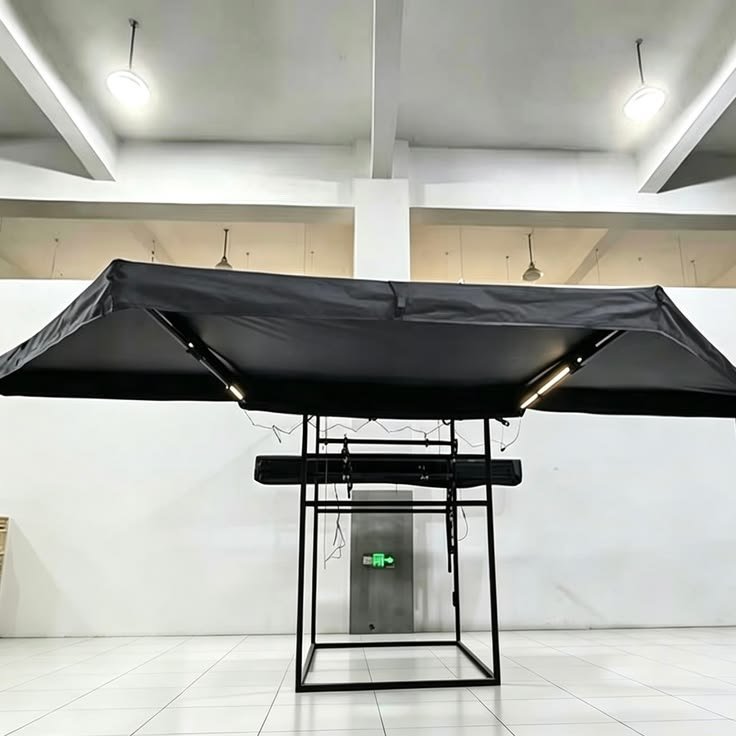
Here is how the two designs compare:
| Feature | Freestanding Awning | Pole-Supported Awning |
|---|---|---|
| Setup | Generally faster | Requires positioning support poles |
| Convenience | Ideal for quick stops | Better for planned campsite setups |
| Weight | Often heavier | Often lighter |
| Price | Generally higher | Often more budget-friendly |
| Ground clearance | No ground poles needed during initial deployment | Poles occupy some space |
| Wind protection | Depends on frame and anchoring | Depends on poles, anchoring, and overall design |
| Best for | Touring, solo camping, frequent stops | Budget-conscious campers, longer stays |
Note: These are general tendencies, not universal rules. Actual performance depends on the model’s construction and specifications.
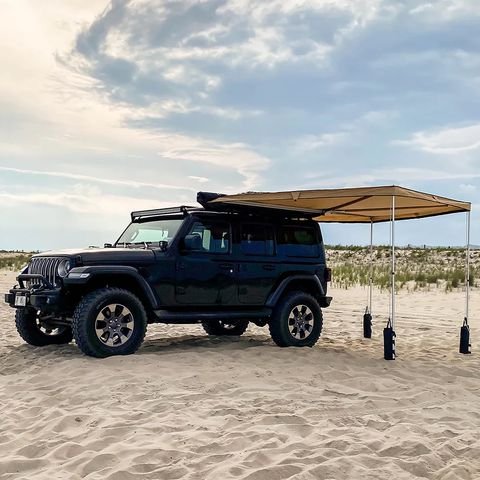
2. Setup Time: Which 4WD Awning Is Easier to Use?
A freestanding awning is a convenient option if you frequently stop for lunch, sightseeing, or short breaks. You can deploy the canopy without first positioning multiple support poles, although larger models may still require more than one person.
A pole-supported awning requires additional steps to position and adjust its poles. However, its straightforward structure can be practical for campers who set up a base camp and stay in one location for several days.
If you often travel alone or move between campsites, a freestanding design may save time. If you prioritize simplicity and affordability over rapid deployment, a pole-supported model may be the better choice.
3. Weight, Stability, and Wind Resistance
Weight is an important consideration when choosing a roof-mounted car awning. Freestanding designs often use reinforced arms and hinges, which can increase the overall weight. Pole-supported models may be lighter, depending on their materials and coverage area.
Before buying, check the awning’s weight and your vehicle and roof rack manufacturer’s load limits.
Wind resistance is equally important. Neither design should be assumed to withstand strong winds simply because of its support system.
- Freestanding awnings: Convenient in suitable weather, but their extended arms and fabric remain exposed to wind forces.
- Pole-supported awnings: Properly positioned poles, guy ropes, and suitable ground anchors can help stabilize the canopy.
- Both designs: Should be secured according to the manufacturer’s instructions and retracted when conditions exceed their specified limits.
For example, DARCHE lists a 30 km/h wind rating for its Eclipse 270 freestanding awning in freestanding mode. This is a model-specific rating, not a universal limit for all freestanding awnings. Always check the exact product’s guidance before use.
4. Which Car Awning Should You Choose?
Choose a freestanding car awning if you:
- Frequently make short stops during road trips.
- Prefer quick deployment and minimal setup steps.
- Often camp alone and value convenience.
- Are comfortable with the additional weight and cost.
Choose a pole-supported car awning if you:
- Want a more budget-friendly option.
- Prefer a relatively simple support structure.
- Usually stay at established campsites.
- Want to balance coverage, weight, and cost.
The bottom line: Freestanding awnings prioritize convenience, while pole-supported awnings can offer a practical balance of simplicity and value. The best choice depends on your camping habits, vehicle setup, and weather conditions.
Frequently Asked Questions
Is a freestanding car awning better than a pole-supported awning?
Not always. Freestanding awnings are generally easier to deploy, while pole-supported models can be lighter and more affordable. Choose according to your budget, vehicle load limits, and intended use.
Do freestanding awnings need poles?
They are designed to support themselves during deployment in suitable conditions. However, support legs, guy ropes, and ground anchors may still be necessary for stability, especially in windy weather. Follow the manufacturer’s instructions.
Are freestanding awnings safe in strong winds?
No awning should be assumed safe in strong winds without considering its tested limits and setup. Wind can damage the fabric, frame, mounting brackets, and vehicle rack. Retract the awning when conditions exceed its specified operating limits.
Can I install a freestanding awning on any vehicle?
Not necessarily. Most vehicle-mounted freestanding awnings require compatible mounting brackets and a suitable roof rack or canopy system. Check the vehicle’s load limits, mounting compatibility, and available clearance before installation.
What should I look for when buying a car awning?
Compare the awning’s coverage area, packed dimensions, weight, fabric quality, frame materials, mounting system, weather guidance, and available accessories. For retailers and outdoor brands, also consider OEM customization, MOQ, packaging, and quality control.
Looking for a Car Awning Supplier?
At LINGHAO Outdoor(OEM car awning supplier), we support outdoor product sourcing for brands and distributors looking to develop their camping product ranges.
If you are comparing freestanding and pole-supported vehicle awnings for your market, contact us to discuss product specifications, OEM/private-label options, customization, and bulk orders.