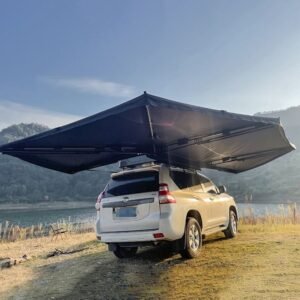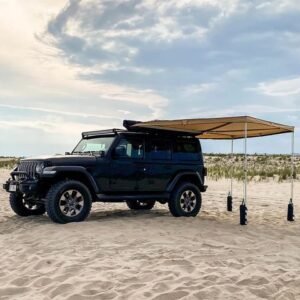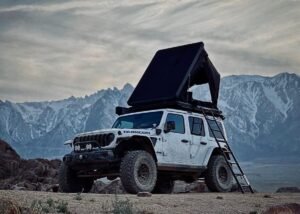
Choosing between a 180-degree car awning and a 270-degree car awning depends on how much shade you need, your vehicle setup, and your camping style. Both provide convenient shelter for outdoor adventures, but they differ in coverage, weight, installation requirements, and overall usability.
In this guide, we’ll compare 180 vs 270 degree awnings to help you choose the right vehicle awning for your next camping trip.
180 vs 270 Degree Car Awning: Key Differences
The main difference is how far the awning extends around your vehicle. A 180-degree awning generally provides broad coverage along one side, while a 270-degree awning wraps around the side and rear.
| Feature | 180-Degree Car Awning | 270-Degree Car Awning |
|---|---|---|
| Coverage | Primarily one side | One side and the rear |
| Shade area | Generally smaller | Generally larger |
| Weight | Often lighter | Often heavier |
| Setup | Usually simpler | May require more support and adjustment |
| Best for | Solo campers, couples, weekend trips | Families, group camping, extended trips |
| Ideal use | Side-door access and basic shade | Tailgate cooking and a larger sheltered area |
Note: Actual coverage, weight, and setup time vary by model. Always check the manufacturer’s specifications.
1. Coverage Area: Side Shade vs. Wraparound Shelter
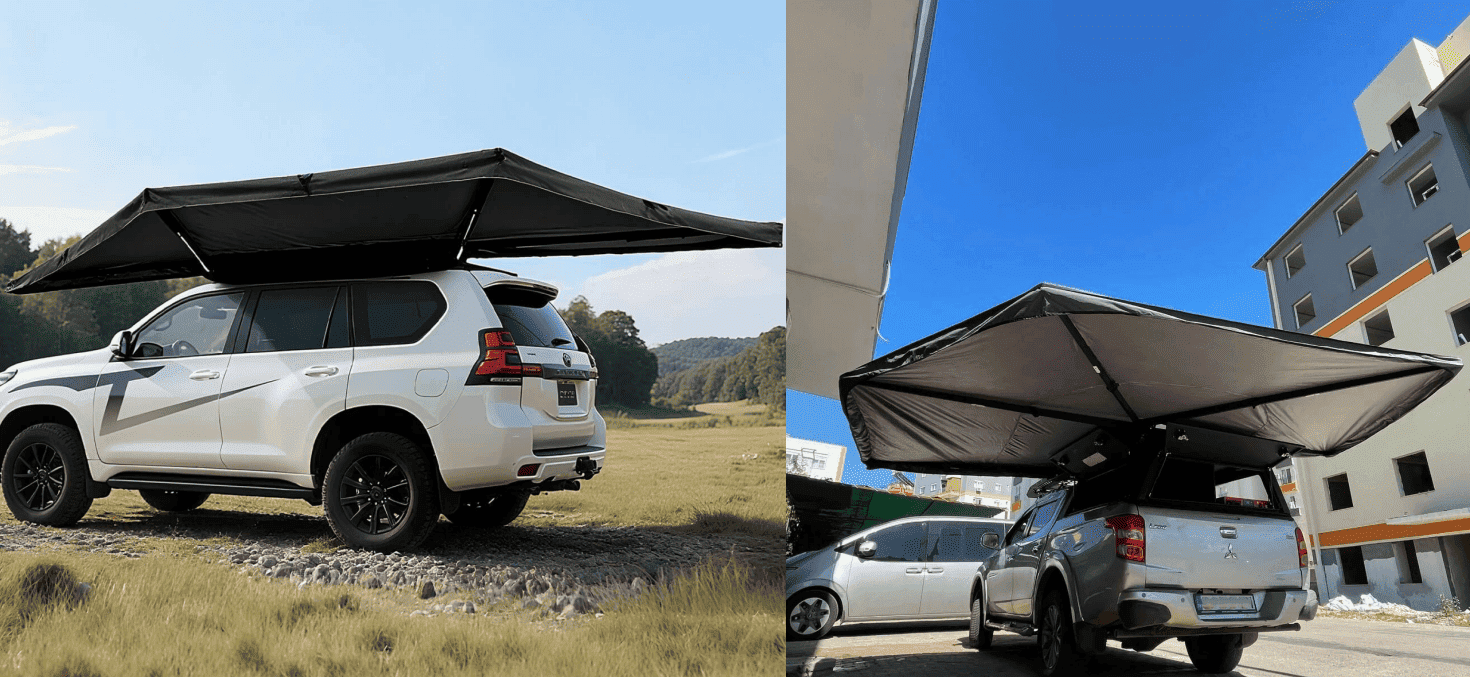
A 180 degree awning is a practical choice if you mainly need shade beside your vehicle. It provides a comfortable space for relaxing, storing camping gear, or enjoying a meal outdoors.
A 270 degree awning extends farther around the vehicle to cover both the side and rear. This makes it especially useful for tailgate kitchens, outdoor cooking, and family camping, where additional sheltered space can make a real difference.
For example, if you regularly cook at the rear of your SUV or pickup truck, a 270-degree awning may offer better coverage. If you mainly sit beside your vehicle, a 180-degree model may be sufficient.
2. Weight and Installation: What Should You Consider?
Weight matters when choosing a car awning, particularly if you already have a rooftop tent, roof rack, or other camping accessories installed.
A 180-degree awning may be a better fit for campers who prefer a simpler, lighter setup. A 270-degree model can provide more coverage, but its extended arms and larger structure may place greater demands on the mounting system.
Before purchasing, check:
- Roof rack capacity: Confirm that the rack can support the awning and other installed equipment.
- Mounting brackets: Make sure the brackets are compatible with your vehicle and rack.
- Vehicle clearance: Check that the awning does not interfere with doors, tailgates, or rooftop tent deployment.
- Setup and storage: Consider how easily the awning can be deployed, secured, and packed away.
Do not assume that every 180-degree awning is lighter or every 270-degree model takes longer to install. Compare the actual specifications of the models you are considering.
3. Weather Protection and Durability
Both 180-degree and 270-degree car awnings can provide shade and protection from light rain, depending on their fabric, construction, and design.
However, a larger awning exposes more fabric to the wind. Strong gusts can place significant stress on the support arms, mounting brackets, and roof rack.
For safer use:
- Check the manufacturer’s wind and weather guidance.
- Use the supplied poles, stakes, and guy ropes as instructed.
- Secure the awning properly and pack it away when conditions exceed its rated limits.
- Check fabric waterproofing, UV resistance, frame materials, and stitching quality before purchasing.
A freestanding design does not mean an awning is safe in strong winds without additional support.
4. Which Car Awning Should You Choose?
Choose a 180-degree car awning if you:
- Mainly need shade along one side of your vehicle.
- Prefer a relatively simple camping setup.
- Want to keep additional roof weight under control.
- Usually camp alone or with one other person.
Choose a 270-degree car awning if you:
- Need shade along both the side and rear of your vehicle.
- Frequently cook or organize equipment at the tailgate.
- Camp with family or friends.
- Want a larger outdoor living space from a single vehicle-mounted awning.
The bottom line: A 180-degree awning is a practical choice for straightforward side coverage, while a 270-degree awning is better suited to campers who regularly use the rear of their vehicle as part of their outdoor living space.
Frequently Asked Questions
Is a 270-degree awning better than a 180-degree awning?
Not necessarily. A 270-degree awning usually offers more wraparound coverage, while a 180-degree awning may suit campers who prioritize simplicity and a lighter setup. The best option depends on your vehicle, available mounting capacity, and camping needs.
How much shade does a 270-degree car awning provide?
The coverage area depends on the awning’s dimensions and design. Some large 270-degree models provide around 10–12 m² of shelter, but smaller and compact models can cover considerably less. Always check the actual coverage specifications.
Can I install a 270-degree awning with a rooftop tent?
Yes, many vehicle setups can accommodate both. However, you must check the combined load against the relevant roof rack and vehicle limits, confirm bracket compatibility, and ensure the awning does not obstruct the rooftop tent or ladder.
Are 180-degree and 270-degree awnings waterproof?
Some models use waterproof or water-resistant fabrics, but performance varies. Check the fabric specifications, seam construction, and rain-use instructions. Proper installation and support are also important for preventing water from pooling.
What should I look for when buying a vehicle awning?
Consider coverage area, packed dimensions, total weight, fabric performance, frame durability, mounting compatibility, setup method, and available accessories. If you are sourcing for a retail brand, also evaluate customization options, packaging, minimum order quantity, and supplier quality control.
Find the Right Vehicle Awning for Your Market
At LINGHAO OUTDOOR, we focus on outdoor camping products and vehicle-based shelter solutions. Whether you are developing a new camping range or expanding an existing product line, choosing the right awning design starts with understanding your customers’ vehicles and outdoor needs.
Looking for a vehicle awning supplier for your brand? Contact our team to discuss product specifications, OEM/private-label options, customization requirements, and bulk purchasing.